
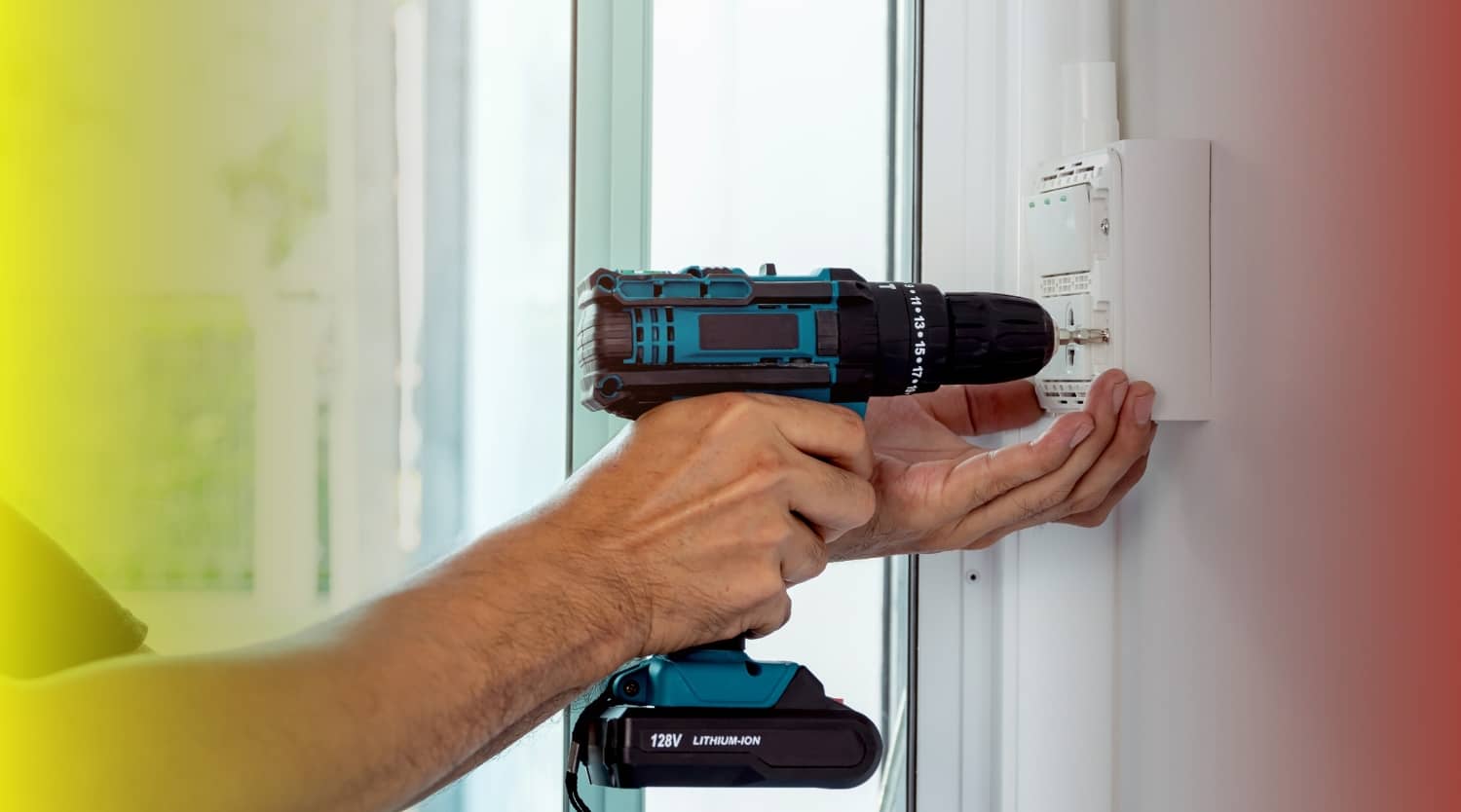
When an outdoor outlet stops working, the fix is usually as simple as pressing the reset button on a tripped GFCI or flipping a tripped breaker.
If those do not bring power back, the cause is often moisture, corrosion, or worn wiring that needs a closer look.
As home inspectors, we see dead exterior outlets on homes of every age, and the reason is rarely a mystery once you check things in the right order.
This guide walks you through the fixes to try first, what each problem means, and the point at which a dead outlet becomes a safety issue worth a professional call.
First, Try These Steps in Order
Start with the quickest, safest checks and work down the list. Most outdoor outlets come back to life within the first two steps.
1. Press the test, then reset, button on the GFCI
Outdoor outlets are required to have Ground Fault Circuit Interrupter (GFCI) protection because they are exposed to moisture. A tripped GFCI is the single most common reason an outdoor outlet has no power.
Press test (you should hear a click), then press reset firmly until it clicks and stays in. If it holds, your outlet should work again.
2. Check for an upstream GFCI in the garage, bathroom, or basement
A single GFCI can protect several “downstream” outlets on the same circuit. If the outdoor outlet itself has no buttons, the GFCI controlling it is somewhere else, often in the garage, a bathroom, or the basement. Find and reset that one.
3. Check the breaker panel
If resetting GFCIs does nothing, head to your electrical panel. Look for a breaker that is off or sitting halfway between on and off.
Flip it fully off, then back on. A breaker that trips again right away points to a deeper fault, not a one-time overload.
4. Let the outlet dry out after rain
Moisture inside the receptacle will trip a GFCI again and again. After heavy rain or snow, turn the circuit off at the breaker, leave the outlet to dry for a few hours, then try resetting. Persistent tripping in wet weather usually means water is getting past the cover.
5. Inspect the cover and connections
With the power off, look for a cracked or missing weatherproof cover, rust, or water inside the box. A damaged in-use cover is an easy, inexpensive replacement. If you see corrosion or scorching, stop and call a professional.
What You’ll Need Before You Start
Troubleshooting an outdoor outlet takes almost no tools, and the most important one is caution. Before you touch anything, make sure your hands are dry, and you are not standing in water or on wet ground.
Keep these on hand:
- A working flashlight to see inside the box and read the panel
- A simple outlet tester or a lamp you know works, to confirm whether power is restored
- A screwdriver, only if you are replacing a weatherproof cover (cover swaps are fine for homeowners; anything behind the faceplate is not)
If at any point you see scorching, smell burning, or feel heat coming from the outlet, stop immediately and turn off the breaker. Those are not troubleshooting situations. They are safe situations.
Why Outdoor Outlets Stop Working
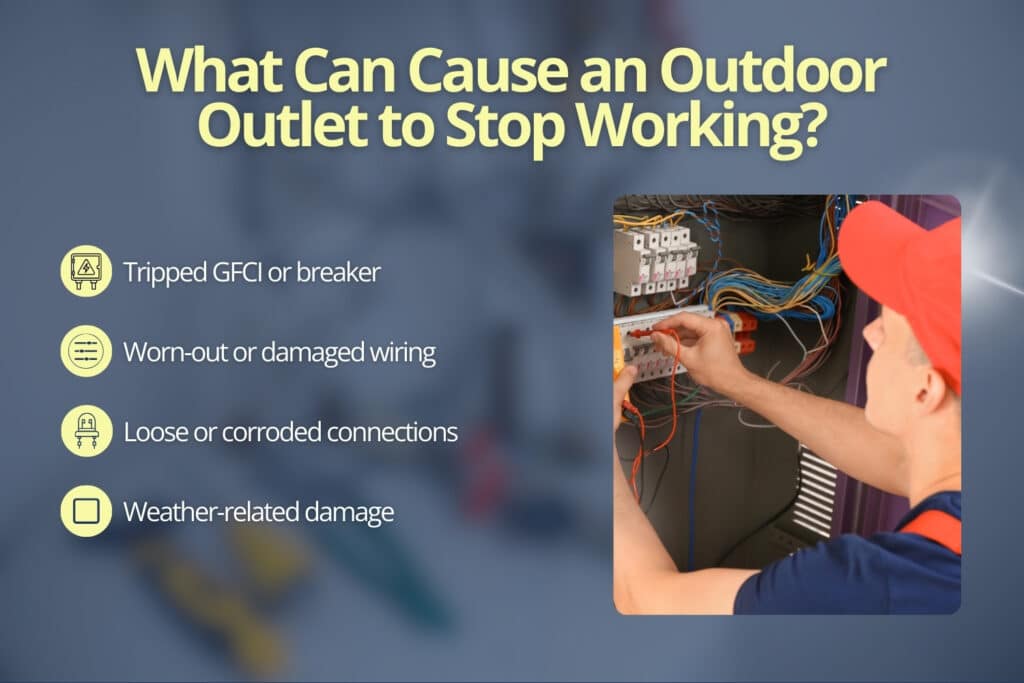
Outdoor outlets stop working for five core reasons: a tripped GFCI, a tripped breaker, weather-related moisture, worn or damaged wiring, and loose or corroded connections. The first two are simple homeowner fixes. The last three often signal a problem that should be inspected before it becomes a fire or shock hazard.
Moisture is the thread that connects most of them. Exterior receptacles live through rain, snow, and temperature swings, and without a proper in-use cover, water seeps in and corrodes contacts or trips the GFCI.
The Electrical Safety Foundation International explains how to keep exterior receptacles protected in its outdoor electrical safety guidance, which is worth a read before the next storm season.
Outdoor Outlet Problems at a Glance
| What you notice | Likely cause | Safe homeowner action | When to call a pro |
|---|---|---|---|
| No power, GFCI resets fine | Tripped GFCI or breaker | Reset the GFCI, then the breaker | If it won’t reset |
| GFCI trips repeatedly | Moisture or wiring fault | Dry out after rain, inspect cover | If tripping continues |
| Rust or water in the box | Failed weatherproof cover | Replace the in-use cover | If wiring is affected |
| Buzzing, heat, burning smell | Damaged wiring | Turn off the breaker, stop | Call immediately |
| Works only sometimes | Loose or corroded connection | Leave it off | Have it inspected |
GFCI Won’t Reset? Here’s What That Means
A GFCI that will not reset is usually doing its job: it senses a ground fault and refuses to restore power until the fault is gone. The two most common reasons are moisture in the circuit and a wiring fault downstream.
Work through it this way: make sure something is actually plugged in is not the issue (some GFCIs won’t reset with a faulty device plugged in, so unplug everything first), dry the outlet fully after wet weather, and check whether the controlling GFCI is upstream.
If it still won’t hold with nothing plugged in and the outlet is dry, the fault is in the wiring and needs a licensed electrician or an inspection to locate.
What a Home Inspector Checks on Outdoor Outlets
During a home inspection, we test every accessible exterior outlet for power, proper GFCI protection, and correct wiring, and we flag issues most homeowners never notice.
Common findings include outlets with no GFCI protection at all, missing or broken in-use covers, reverse polarity, and open grounds.
These are the small defects that turn into shock and fire risk over time, and they show up constantly on older homes and DIY additions. P.I. Home Inspection Services evaluates the electrical system as part of a standard home inspection, so problems like these get documented before they cause trouble.
If you are buying a home with older wiring, our guide on whether knob and tube wiring is safe is a useful companion read.
Common Mistakes That Make the Problem Worse
A few well-meaning habits can turn a simple dead outlet into a bigger repair. Knowing what to avoid saves you time and keeps you safe.
- Forcing the reset button repeatedly. If a GFCI won’t hold a reset, jamming the button does nothing except mask a real fault. The outlet is telling you something is wrong.
- Skipping the upstream GFCI. Many homeowners replace a “broken” outdoor outlet that was never broken. The GFCI controlling it was simply tripped in the garage or bathroom.
- Ignoring a missing cover. An open or cracked cover lets water in every time it rains, so the outlet keeps tripping no matter how many times you reset it.
- Using indoor extension cords outside. Indoor-rated cords are not built for moisture and can create the very faults that trip your GFCI.
- Opening the box. Anything behind the faceplate involves live wiring and should be left to a licensed electrician or flagged during an inspection.
How to Prevent Outdoor Outlet Problems
A little maintenance keeps exterior outlets working and safe for years.
- Install or replace in-use (“bubble”) covers that protect the outlet even with a cord plugged in
- Keep outlets dry and clear of debris and mulch
- Avoid overloading a circuit with too many high-draw devices
- Use outdoor-rated extension cords and appliances
- Test GFCIs monthly by pressing the test and reset
- Schedule periodic inspections, especially on older homes
For broader seasonal home safety, Premier Inspects offers a good reminder to test your carbon monoxide detectors at the same time you check your outlets.

Related Questions to Explore
Why is my outdoor outlet not working, but the breaker isn’t tripped?
When the breaker looks fine, but the outlet is dead, the cause is almost always a tripped GFCI, either on the outlet itself or on an upstream outlet in the garage, bathroom, or basement that shares the circuit. Reset that GFCI first. If nothing resets and the breaker truly isn’t tripped, a loose connection or moisture fault is likely and should be inspected.
Why won’t my GFCI outlet reset after rain?
A GFCI usually won’t reset after rain because moisture has gotten into the receptacle or cover and is creating a ground fault. Turn off the circuit, let the outlet dry for several hours, and replace a cracked or missing weatherproof cover. If it still won’t reset once dry, the wiring needs a professional look.
Can one GFCI control multiple outdoor outlets?
Yes. A single GFCI can protect several downstream outlets on the same circuit, which is common in many homes. That is why resetting one GFCI often restores power to outlets that have no reset button of their own.
How long do GFCI outlets last?
GFCI outlets typically last about 7 to 10 years, and outdoor units often wear out sooner because of moisture and temperature swings. If a GFCI trips constantly, won’t reset, or feels warm, replace it. Testing monthly is the easiest way to catch a failing unit early.
When to Call a Professional
Call a professional when resetting the GFCI and the breaker doesn’t restore power, when you see or smell buzzing, heat, sparking, or burning, or when the wiring looks old, frayed, or corroded.
Faulty wiring is a leading cause of electrical fires and is never a DIY repair.
A licensed electrician handles the repair, and a home inspector can tell you whether the problem is isolated or part of a larger electrical concern. P.I. Home Inspection Services serves Batavia and the surrounding Fox Valley and western Chicago suburbs.
If you want the full picture of your home’s electrical system, schedule an inspection with our team.
Conclusion
A dead outdoor outlet is usually an easy fix once you check things in the right order.
- Start with the GFCI reset, then any upstream GFCI, then the breaker
- Moisture, corrosion, and worn wiring are the causes that need a pro
- Buzzing, heat, or a burning smell means stop and call right away
If resetting doesn’t solve it, or you’d like peace of mind about the wiring behind the wall, book a home inspection with P.I. Home Inspection Services and get every outlet checked the right way.
