
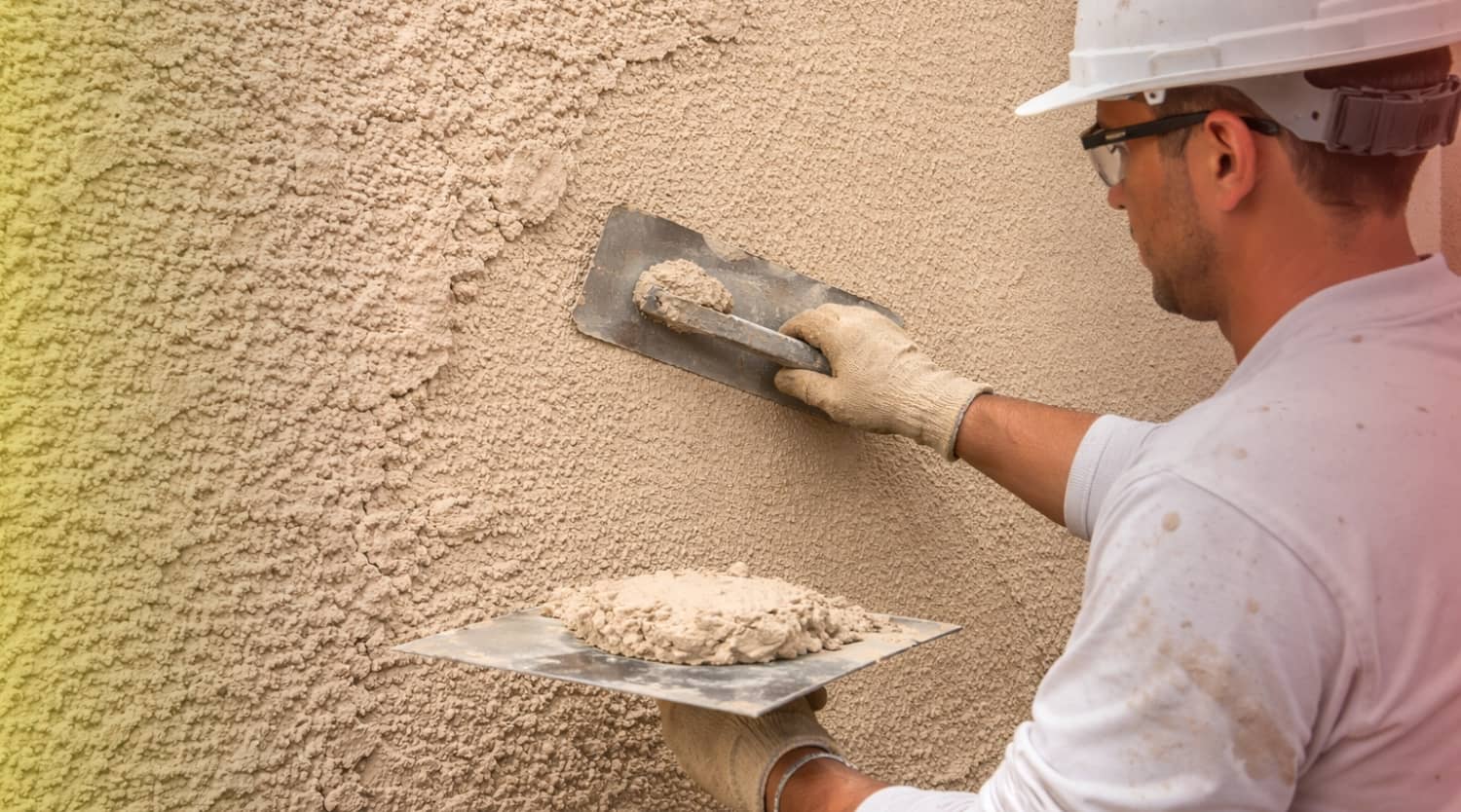
EIFS (Exterior Insulation and Finish System), also known as synthetic stucco, offers a modern look and energy efficiency. However, beneath its polished exterior, EIFS can develop issues that are challenging to spot. From water intrusion to unsightly cracks, these risks can lead to costly repairs if left unaddressed.
For homeowners, knowing the most common EIFS stucco problems can help preserve a building’s value and structure for as long as possible.
Since it’s not quite common knowledge, this post will walk through six common issues with EIFS, how they develop, and how you can combat them.
What Is an EIFS?
EIFS (Exterior Insulation and Finish System) is a type of synthetic stucco used on both residential and commercial buildings.
Unlike traditional stucco, which relies on a mixture of cement, sand, and water, EIFS is a multi-layered system designed to provide insulation and a smooth, customizable finish.
Beyond that, EIFS is 80% lighter than stucco at approximately 2 pounds per square foot.
Its popularity comes from its energy efficiency, as it helps reduce heating and cooling costs, and its ability to mimic various textures and styles.
An EIFS system typically consists of several layers:
- An insulation board that enhances energy efficiency.
- A base coat reinforced with mesh for added durability.
- A finish coat that gives the system its final look and protects against the elements.
While EIFS offers excellent energy savings and nice aesthetics, it also requires a precise installation with ongoing care to perform as intended. Poor installation or neglect can lead to problems, like moisture buildup, which may not be obvious at first.
Why EIFS Stucco Requires Special Attention
While traditional stucco can absorb and release water naturally, EIFS is designed to act as a barrier, preventing water from penetrating.
This barrier-like quality is what makes proper installation critical: EIFS is unique in how it handles moisture compared to other exterior systems. More specifically, if gaps, cracks, or improper sealing exist, water can become trapped behind the system.
Primary reasons that synthetic stucco needs extra care:
- Moisture Sensitivity: Even small gaps in flashing or sealing can allow water in, leading to mold or wood rot behind the surface.
- Complex Installation: EIFS must be installed precisely, with all layers working together to create a seamless system. Errors during installation often cause long-term issues.
- Hidden Damage Risks: Problems like delamination or water intrusion often occur behind the visible layer, making them harder to detect without a professional inspection.
Regular maintenance and inspections are the only reliable way to identify potential issues early. By addressing small problems before they escalate, you can protect your investment and enjoy the long-term benefits of EIFS.
Six Common EIFS Stucco Problems
EIFS stucco is a popular choice for its sleek appearance and energy-saving benefits, but it’s not without potential issues.
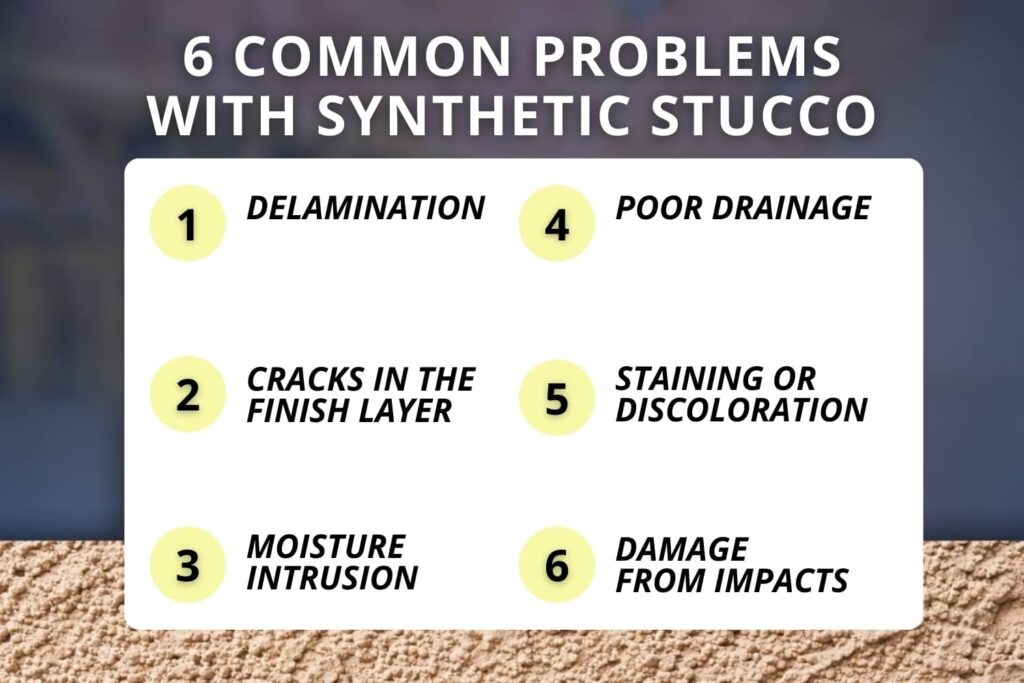
Knowing what to watch for can help homeowners address problems early and avoid costly repairs. Below are six common EIFS stucco problems and how they develop:
1) Moisture Intrusion
EIFS is designed to keep water out, but improper installation or damaged seals can allow moisture to seep behind the system. Once trapped, the water can cause mold, mildew, and wood rot.
Poor flashing around windows, doors, or rooflines is a common culprit, making moisture one of the most significant risks with EIFS.
2) Cracks in the Finish Layer
Cracking may occur due to building settlement, weather changes, or physical impacts like hail.
Even small cracks can let water into the system, compromising its insulation and leading to further damage. Cracks are often more than just cosmetic: they’re early warning signs of larger issues.
3) Delamination
Delamination happens when the layers of EIFS separate from the wall they’re applied to. This issue often stems from poor adhesion during installation or prolonged moisture exposure.
Delamination weakens the system and reduces its insulating properties, leaving it vulnerable to further damage.
4) Poor Drainage
EIFS systems rely on proper drainage to direct water away from the home. When drainage systems, such as weep screeds or flashing, are missing or improperly installed, water can accumulate behind the stucco.
Over time, this hidden moisture leads to structural damage and compromises the home’s stability.
5) Staining or Discoloration
Discoloration is a common issue with EIFS, especially in damp or shaded areas. Algae, mildew, or dirt buildup can cause unsightly stains, while UV exposure may fade the finish over time.
Although staining might seem minor, it often signals underlying moisture problems that need immediate attention.
6) Damage from Impacts
EIFS is lightweight, making it more susceptible to dents or punctures from hail, tree branches, or other impacts. Even small areas of damage can weaken the system’s ability to keep water out, leading to larger issues if left unaddressed.
Being aware of these common EIFS stucco problems can help you take proactive steps to protect your property!
Quick Reference: Common EIFS Problems at a Glance
| Problem | Primary Cause | Potential Consequences | Severity Risk |
|---|---|---|---|
| Moisture Intrusion | Poor sealing or flashing | Mold, rot, structural damage | High |
| Cracking | Settlement, weather, impacts | Water infiltration | Moderate–High |
| Delamination | Poor adhesion or trapped moisture | Loss of insulation, system failure | High |
| Poor Drainage | Missing/incorrect weep systems | Structural instability | High |
| Discoloration | Algae, mildew, UV exposure | Cosmetic + moisture warning signs | Moderate |
| Impact Damage | Hail, debris, accidental contact | Compromised barrier system | Moderate |
Preventing EIFS Stucco Problems
Essentially, preventing EIFS stucco problems starts with proactive care and attention to detail.
While no exterior system is completely maintenance-free, simple steps can go a long way in protecting your home and avoiding costly repairs.
Here are some ways to keep your synthetic stucco in great condition:
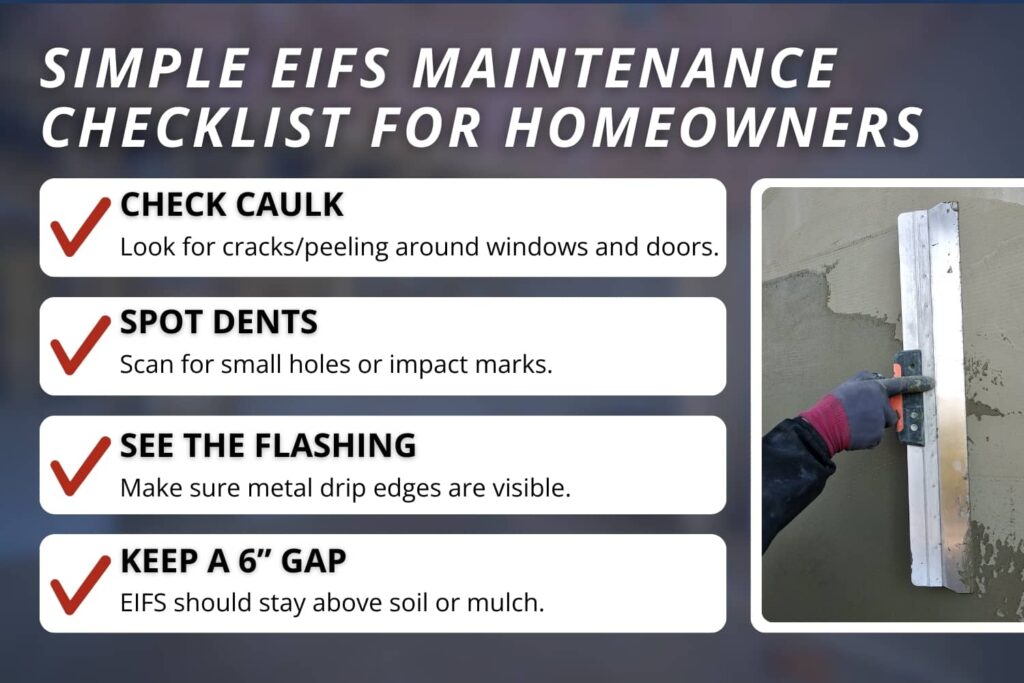
- Inspect for visible cracks, stains, or damage regularly, especially after storms or extreme weather.
- Clear debris from drainage systems, like weep screeds and flashing, to ensure proper water flow.
- Address any small issues (such as gaps around windows or doors) as soon as they’re noticed.
- Avoid pressure washing, as it can damage the finish layer and force water into the system.
- Schedule professional inspections to catch hidden problems, like delamination or moisture buildup.
When to Call a Pro
EIFS issues and other structural concerns are often below the surface, so professional inspections are crucial for identifying problems before they escalate.
If you’re unsure about the condition of your EIFS or notice signs of trouble, it’s time to bring in an expert.
Here are a few signs your next best step is to pick up the phone:
- Persistent Moisture Problems: Unexplained indoor humidity, staining on drywall, or musty odors may indicate hidden moisture intrusion behind the EIFS.
- Visible Cracks or Damage: Even small openings in the finish layer can allow water to penetrate the system and become trapped.
- Water Pooling Around the Home: Improper grading or drainage can contribute to moisture problems that affect your EIFS and overall structure.
- Aging or Poor Installation History: Older barrier-style EIFS systems (especially pre-2000 installations) are more prone to moisture issues if they lack proper drainage systems.
- Selling or Buying a Home: An EIFS-specific inspection protects both buyers and sellers by identifying potential hidden risks before closing.
Ignoring early warning signs can allow minor issues to turn into structural repairs involving rot remediation, mold removal, or full system replacement. Addressing concerns early is almost always significantly less expensive than waiting.
Don’t wait for small concerns to turn into costly repairs; call on the right professional to keep your home in top condition.
Related Questions
How long does EIFS stucco last?
With proper installation and ongoing maintenance, EIFS can last for decades. Its lifespan largely depends on how well moisture is managed and whether small issues are addressed early. For a full picture of how exterior system care fits into overall home upkeep, read our essential care checklist for any house with a basement.
Is EIFS more prone to water damage than traditional stucco?
EIFS can be more vulnerable to moisture issues if not installed correctly. Learn more about what water intrusion is and how to prevent it from our dedicated EIFS resources.
Can EIFS be repaired, or does it require full replacement?
In many cases, localized damage such as small cracks or impact areas can be repaired. A professional inspection helps determine the appropriate solution. See our full breakdown of what EIFS stucco is and how inspectors evaluate it for more details.
How often should EIFS be inspected?
EIFS should be inspected regularly, particularly after severe weather or if any signs of moisture or damage appear. Our post on the risks of ignoring water damage on the ceiling shows how interconnected moisture issues can become when left unchecked.
Conclusion
EIFS stucco offers a sleek, energy-efficient exterior for homes, but like any system, it requires proper care and attention to stay in top condition.
When you have an idea of common EIFS problems and take preventative steps, you can protect your property value and your wallet.
If you’re concerned about your EIFS or want to make sure your whole property’s in good shape, a professional inspection can ease your stress. In Batavia, IL, Chicago, and all of the surrounding suburbs, P.I. Home Inspection Services specializes in helping property owners protect their investment and their peace. Schedule your inspection today.
