
Termite wood damage looks like dry, brittle wood with winding tunnels running along the grain, and it is almost always hidden until a colony has been feeding for years.
Eastern subterranean termites, the species responsible for nearly all infestations in northern Illinois, work from the inside out. By the time a soft spot or mud tube appears, the damage is rarely new.
This guide from P.I. Inspections covers what to look for, how to tell termite damage from wood rot, and what to do when you find it in your Batavia or Fox Valley home.
What Termite Wood Damage Actually Looks Like
Termite wood damage has a clear signature once you know where to look. Termites eat the soft spring wood and leave the harder grain lines intact, creating a maze-like interior that looks hollow and papery.
The most common signs:
- Hollow-sounding wood. Tap a baseboard, door frame, or floor joist with a screwdriver handle. A dull, hollow thud means the interior may have been eaten out. Solid wood produces a crisp knock.
- Papery or blistered grain. The surface can look wavy or slightly raised, similar to water damage. The difference: the wood beneath a termite infestation is dry and crumbly, not soft and wet.
- Winding galleries inside the wood. If you peel back a damaged piece, you will find channels running with the grain. Termites eat the cellulose and leave a thin shell behind.
- Mud tubes on the foundation or framing. These pencil-wide earthen tunnels are the most reliable sign of subterranean termite activity. Look for them on concrete block walls, rim joists, crawl space framing, and piers.
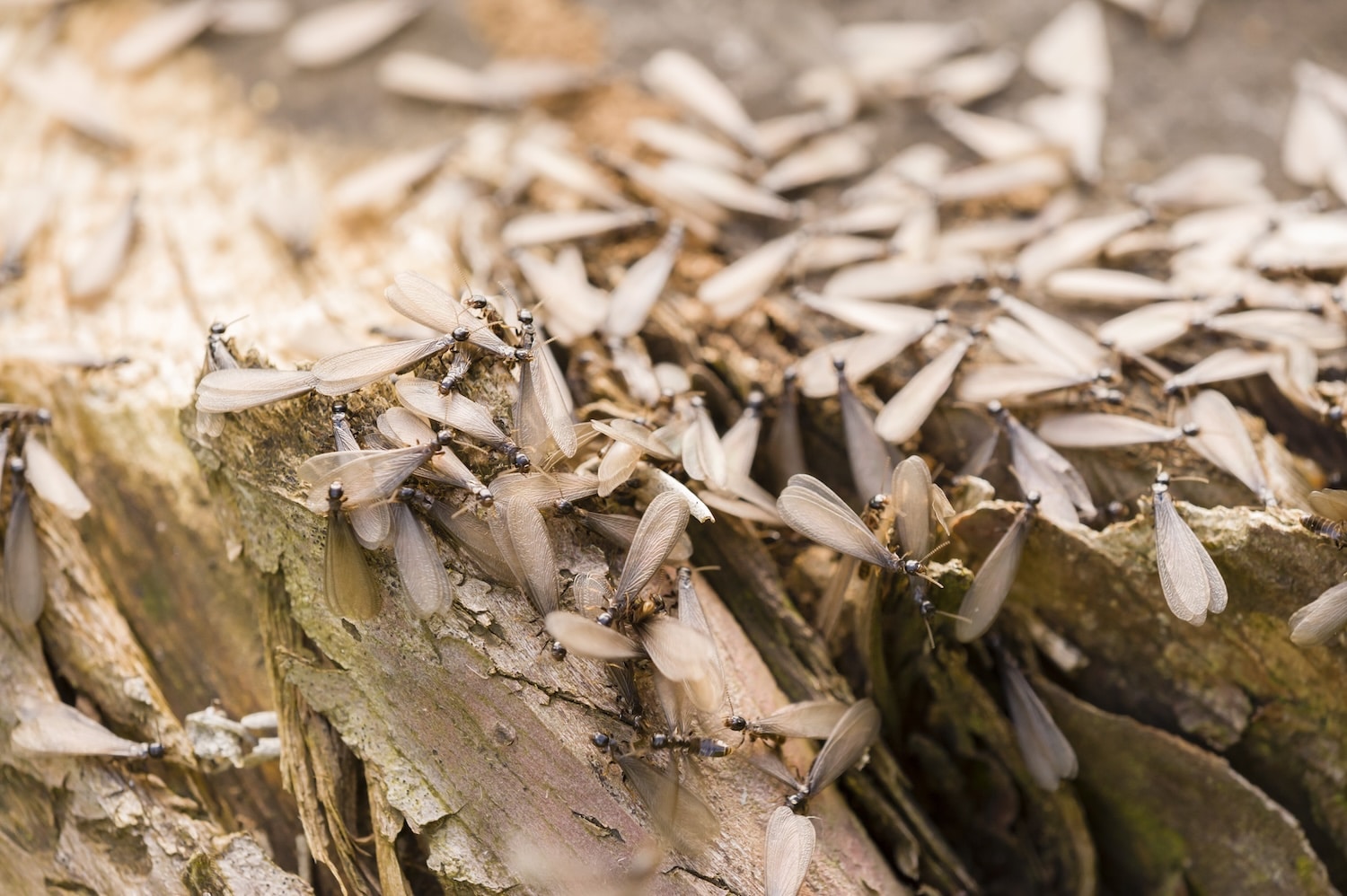
- Discarded wings near windows or doors. In spring, winged reproductives (swarmers) shed their wings immediately after landing. A pile of small, equal-length wings on a windowsill signals a nearby active colony.
- Frass near baseboards. Drywood termites push pellet-shaped droppings out of the wood. In Illinois, nearly all cases are subterranean; evidence is typically mud tubes, not frass.

Termite Damage vs. Wood Rot: How to Tell the Difference
Many homeowners confuse termite wood damage with wood rot. Both show up in dark, damp spaces, and both weaken structural wood. The causes and fixes are different, so getting this right matters.
Side-by-Side Comparison
| Feature | Termite Wood Damage | Wood Rot |
|---|---|---|
| Texture | Dry, brittle, papery tunnels | Soft, spongy, or crumbly; often wet or damp |
| Pattern | Tunnels follow the wood grain; a thin shell is left behind | Cubicle or alligator-skin cracking; breaks across the grain |
| Cause | Subterranean termite colony feeding on cellulose | Fungi from sustained moisture exposure |
| Common location | Sill plates, floor joists, crawl space framing | Fascia, deck boards, windowsills, and wood with chronic water contact |
| Mud tubes present? | Yes | No |
The screwdriver probe test works for both: press the tip into the wood. Solid wood resists. Damaged wood gives way. If you find tunnels and mud nearby, assume termites. If the wood is wet and spongy with no tunnels, rot is more likely.
Both problems can appear in the same spot. Termites seek moisture-damaged wood, so a rot area near the foundation can attract a colony. If you have had moisture issues in your crawl space or basement, our basement care checklist covers how to reduce conditions that invite both problems.
Where Termite Wood Damage Typically Starts in a Home
Eastern subterranean termites live underground and travel up through the soil to reach wood. They need moisture to survive, so damage almost always begins at points where wood is close to the ground or near a water source.
The highest-risk areas in Illinois homes:
- Sill plates and rim joists. These horizontal wood members sit directly on the foundation wall. In older homes throughout Batavia, Geneva, and St. Charles, sill plates are a primary entry point.
- Crawl space framing. Dark, damp crawl spaces with inadequate ventilation are exactly the environment termites seek.
- Basement support posts and beams. Any wood in contact with concrete in an unfinished basement is at risk.
- Wood decks and porch framing. Outdoor structures close to the soil, especially those built with untreated lumber, see termite activity frequently in the Fox Valley area.
- Door and window framing. Termites travel through foundation cracks into framing behind finished walls, where damage is invisible until well advanced.
Illinois sits in USDA Termite Infestation Probability Zone 2 (moderate to heavy infestation risk). The Fox Valley area’s older housing stock, much of it built between the 1950s and 1980s with untreated lumber, is particularly exposed. Swarm season in northern Illinois runs from March through May, triggered by warm temperatures and spring rain.
How to Check Your Home for Termite Damage
A basic walk-through can catch visible signs, though it will not find damage inside walls or under flooring. Here is a practical process:
- Walk the foundation perimeter. Look for mud tubes running up concrete, block, or brick. Check where wood siding meets the foundation line.
- Probe the crawl space or basement framing. Bring a flashlight and a flathead screwdriver. Press the tip firmly into sill plates and rim joists. Sound wood resists; termite-damaged wood sinks in with little pressure.
- Check interior baseboards and door frames. Look for bubbling or peeling paint, soft spots when you press on the surface, or a slightly wavy wood grain.
- Look for swarmers or wing piles. In late March through May, check windowsills and areas around exterior doors.
- Inspect accessible floor joists from below. In a basement, look up at the subfloor and joists with a flashlight. Mud deposits, pinholes, or stained wood on joist faces are warning signs.
Per EPA guidance on identifying and controlling termites, homeowners in moderate-to-high risk zones should inspect accessible wood at least once a year.
Keep in mind: termites avoid light and stay inside walls and under flooring. A DIY check only covers what you can reach and see. Hidden structural members require professional tools to inspect properly.
The team at R&C Inspectors in Massachusetts outlines in their guide on how a termite inspector protects your home investment, how infrared imaging detects heat signatures from active colonies even before surface damage appears.
How Much Does Termite Damage Repair Cost?
Repair costs vary based on what was damaged and how long the infestation went undetected.
| Type of Damage | Typical Repair Range |
|---|---|
| Localized sill plate or rim joist | $500 to $2,000 |
| Floor joist sistering (several joists) | $2,000 to $6,000 |
| Subfloor replacement (partial) | $1,500 to $4,500 |
| Structural beam replacement | $5,000 to $15,000+ |
| Widespread structural damage | $20,000 and above |
These figures cover repair work only. Termite treatment (pest control) runs an additional $400 to $2,500, depending on the method and scope.
Standard homeowners’ insurance does not cover termite damage. Insurers classify termite infestations as preventable maintenance problems rather than sudden accidental losses.
A WDO inspection typically costs $75 to $150, a fraction of what a single joist repair runs. For a visual sense of what inspectors find, Accurate Home Inspectors of Florida’s post on what termites look like walks through visual identification across several termite types.
Related Questions to Explore
Is a termite inspection included in a standard home inspection?
A standard home inspection evaluates the overall condition of a property’s structure, mechanical systems, and roofing, but it does not typically include a specialized wood-destroying organism (WDO) report. Because subterranean pests operate entirely out of sight, pairing your structural review with an ancillary inspection specifically for wood-boring insects provides a complete picture of a property’s health.
How do inspectors find hidden wood damage without tearing open drywall?
Advanced technology makes it possible to scan behind walls non-invasively. Inspectors often utilize an infrared inspection to detect thermal anomalies, which can reveal hidden moisture pockets, missing insulation, and active pest colonies nesting inside wall cavities. This targeted approach allows homeowners to pinpoint structural issues before minor damage turns into a major tear-out.
Can the same moisture conditions that attract termites cause indoor mold?
Yes. Subterranean termites require high humidity to survive, which perfectly aligns with the environments where fungal spores thrive. If a crawl space or basement suffers from poor ventilation or water intrusion, scheduling a professional mold inspection is highly recommended alongside a pest review to address both structural wood decay and potential indoor air quality risks.
Do commercial buildings face the same risks for structural pest damage?
While modern commercial facilities utilize more concrete and steel than residential properties, they are not immune to wood-boring pests. Wood framing, trim, drywall backing, and roof plates can all host infestations if moisture is present. Routine commercial inspections help property owners identify localized vulnerabilities, foundation cracks, and drainage issues that could invite unwanted pests.
When to Call a Professional
A DIY walk-through covers only what you can see. Call a licensed WDO inspector if you notice:
- Mud tubes anywhere on your foundation or framing
- Hollow-sounding wood along baseboards, door frames, or floor joists
- Piles of discarded wings near windows or exterior doors in spring
- Soft spots in flooring or walls with no obvious moisture source
- Any visible tunneling inside wood you have probed or broken
- You should also schedule a WDO inspection if:
- You are buying or selling a home in Batavia, Geneva, St. Charles, or the Fox Valley area
- Your home has a crawl space or unfinished basement with wood framing near the soil
- You have had basement moisture or mold issues that may have attracted termites
- It has been more than two years since your last home or termite inspection
- Your home was built before 1985 with untreated lumber
Mark Sylvester, InterNACHI Certified Professional Inspector at P.I. Inspections, provides thorough Wood-Destroying Organism inspections for buyers, sellers, and homeowners throughout the Chicago western suburbs.
Conclusion
Termite wood damage is almost always more advanced than it looks. Three things to take away:
- Termite damage looks like dry, brittle wood with tunnels running along the grain, distinct from the soft, wet texture of wood rot
- The highest-risk areas in Illinois homes are crawl spaces, sill plates, floor joists, and any wood close to soil or a moisture source
- Standard homeowners’ insurance does not cover termite damage, making early detection the most cost-effective step you can take
If you have spotted warning signs or just want peace of mind before the next swarm season, contact us to schedule a WDO inspection with P.I. Inspections. We serve Batavia, Geneva, St. Charles, Naperville, and the surrounding Fox Valley area.
