
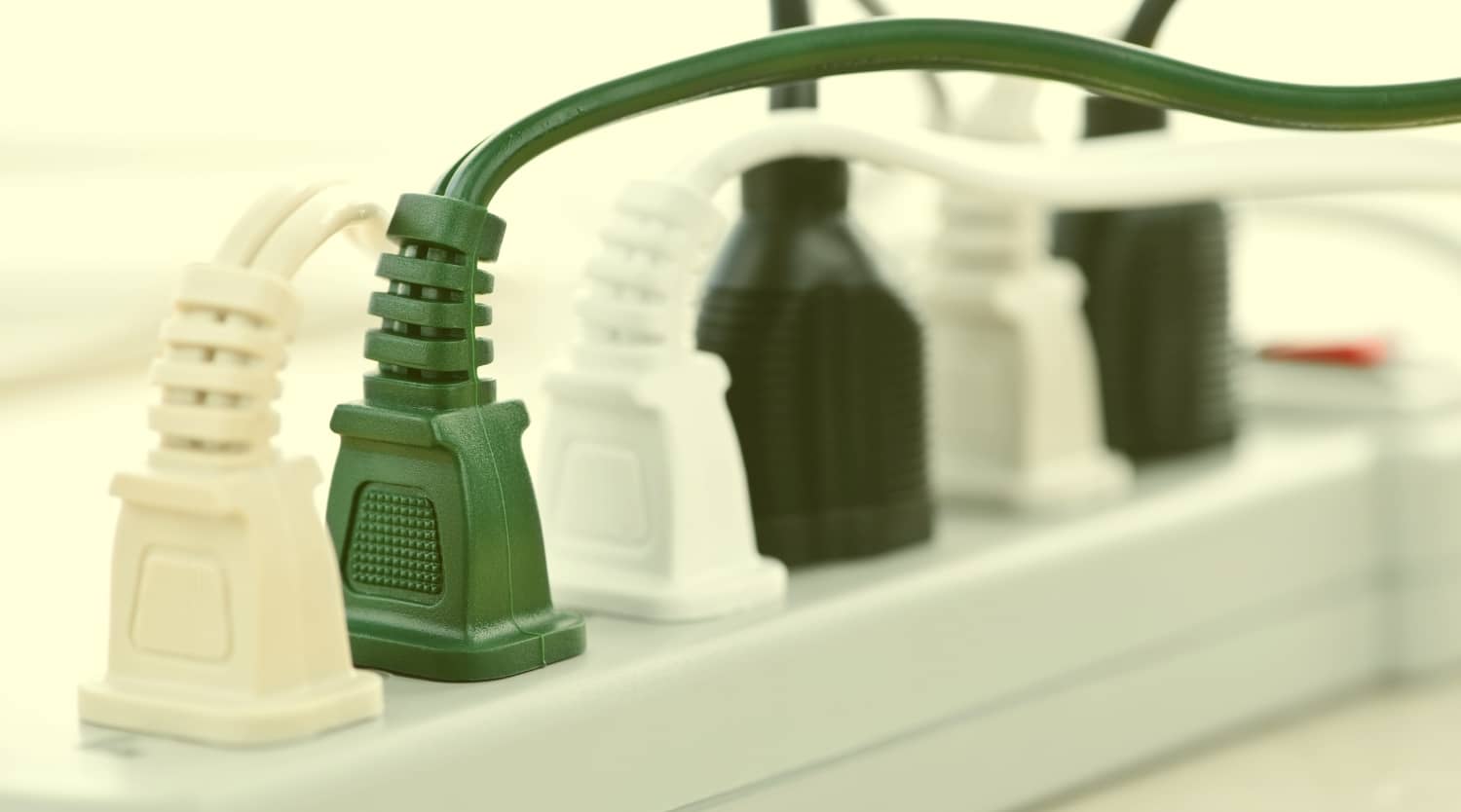
Surge protection is a device or system that shields your home’s electronics from sudden voltage spikes by diverting the extra energy safely to the ground.
It comes in two main forms: plug-in surge protectors that guard a few devices, and whole-home units wired at the electrical panel that protect everything.
As home inspectors, we see the damage unprotected surges leave behind, from fried HVAC boards to dead appliances. This guide explains what surge protection is, how it works, the difference between a power strip and real protection, and whether your home needs it.
What Is a Power Surge?
A power surge is a brief spike in your home’s electrical voltage that rises above the normal 120 volts. Even a spike that lasts a fraction of a second can damage sensitive electronics by overheating their internal components.
Most people picture a lightning strike, but the Electrical Safety Foundation International notes that the National Electrical Manufacturers Association estimates 60 to 80 percent of surges actually start inside the home, from large appliances cycling on and off.
You can read more in ESFI’s overview of surge protection for your electronics and home. Small surges happen constantly and quietly wear down devices over time, while a large external surge can destroy them instantly.
How Surge Protection Works
Surge protection works by sensing excess voltage and redirecting it away from your devices and into your home’s grounding system.
The core component in most protectors is a metal oxide varistor, or MOV, which acts like a pressure valve: at normal voltage, it does nothing, but when voltage spikes, it opens a path that shunts the extra energy to ground.
A surge protector’s capacity is measured in joules, the total amount of energy it can absorb over its lifetime. A higher joule rating means more protection and a longer service life.
Once that capacity is used up, the protector still passes power but no longer protects, which is why surge protectors wear out and need replacing.
Types of Surge Protection
There are two main types of surge protection, and they work best together as a layered defense.
Point-of-use surge protectors
These are the plug-in units you put behind a TV, computer, or home office setup. They protect only what is plugged into them, and are inexpensive and easy to install yourself. They are the first layer of defense for sensitive electronics.
Whole-home surge protection (SPDs)
A whole-home surge protective device (SPD) is installed at or near your main electrical panel by a licensed electrician. It protects every circuit in the house, including hardwired systems like your furnace, air conditioner, and major appliances that a plug-in unit can’t reach. This is the strongest layer of protection, and the one most homeowners overlook.
Why a power strip is not a surge protector
A power strip simply adds more outlets. A surge protector contains the components that actually absorb voltage spikes. ESFI states plainly that the two are not interchangeable, yet they look nearly identical on a shelf.
Always check the packaging for a joule rating and a UL 1449 listing, which is the safety standard for surge protective devices.

What Causes Power Surges in a House?
Power surges come from both inside and outside your home, and the internal sources are far more common.
- Large appliances cycling: air conditioners, refrigerators, and pumps draw a burst of power when they switch on, creating small surges
- Lightning strikes: rare but powerful enough to overwhelm most protection
- Utility grid switching: power company operations and outages that end with a spike
- Faulty or outdated wiring: loose connections and old panels that can’t handle modern loads
- Downed power lines or transformer issues in your neighborhood
Older homes with aging electrical systems are especially vulnerable, which is one reason an electrical evaluation matters during a home inspection.
What Surge Protection Does and Doesn’t Cover
Surge protection guards against voltage spikes, but it is not a cure-all for every electrical problem, and knowing the limits helps you set the right expectations.
Surge protection does:
- Absorb and divert sudden voltage spikes from internal and external sources
- Shield sensitive electronics like TVs, computers, and appliance control boards
- Reduce the slow, cumulative wear that small everyday surges cause
Surge protection does not:
- Stop a power outage or act as a battery backup (that is what an uninterruptible power supply does)
- Prevent damage from a direct lightning strike to the home, which can overwhelm any device
- Fix underlying problems like faulty wiring, an overloaded panel, or poor grounding
That last point matters most. A surge protector relies on a solid grounding path to send excess energy somewhere safe.
If a home has poor or missing grounding, even a quality device can’t do its job, which is one more reason the condition of the whole electrical system matters.

How to Choose a Surge Protector
Choose a surge protector by matching its joule rating and safety listing to what you are protecting. A few specs tell you almost everything you need to know.
- Joule rating: higher is better. Aim for 1,000 to 2,000 joules for general electronics and 2,000 or more for computers and home theater gear.
- UL 1449 listing: This is the safety standard for surge protective devices. If it isn’t listed, treat the product as a plain power strip.
- Clamping voltage: the level at which the device starts diverting energy. A lower clamping voltage (around 400 volts or less) means it reacts sooner.
- Indicator light: tells you the protection is still active. Once that light goes out, the unit is done protecting, even though it still passes power.
- Warranty: A strong connected-equipment warranty signals the manufacturer’s confidence.
For complete coverage, pair a whole-home unit at the panel with point-of-use protectors on your most valuable electronics.
That layered approach catches large surges at the entry point and cleans up the smaller ones that slip through.
Do You Need Whole-Home Surge Protection?
You likely benefit from whole-home surge protection if your house has central HVAC, smart-home devices, expensive electronics, or an older electrical panel. The more sensitive electronics a home relies on, the bigger the payoff.
Whole-home protection is most worthwhile when the cost of the device is small compared with what it protects.
A single SPD costs far less than replacing a furnace control board, a refrigerator, or a home theater. For homes with frequent storms, well pumps, or solar systems, it moves from “nice to have” toward “strongly recommended.”
How Much Does Surge Protection Cost?
A plug-in surge protector costs roughly $20 to $100, depending on its joule rating, while a professionally installed whole-home SPD typically runs about $300 to $700, including labor.
That one-time cost is small next to the value of the appliances and electronics it guards, and many homeowners install whole-home protection during other electrical work to save on labor.
What Home Inspectors Look For
During an inspection, we assess the overall condition and capacity of the electrical system, which directly affects how vulnerable a home is to surges. We note the panel’s age and brand, signs of outdated or unsafe wiring, missing grounding, and whether sensitive areas have appropriate protection.
We don’t sell or install surge devices, so the assessment is neutral. If you are buying an older home, pairing this post with our guide on whether knob and tube wiring is safe gives a fuller picture of the electrical risks worth checking. And if an outdoor receptacle has ever quit on you, our walkthrough on an outdoor outlet not working covers another common electrical headache.
Related Questions to Explore
What is the difference between a surge protector and a power strip?
A power strip only adds extra outlets, while a surge protector contains components that absorb voltage spikes and protect your devices. They look almost identical, so check for a joule rating and a UL 1449 listing. If those aren’t on the label, it’s just a power strip.
How many joules do I need in a surge protector?
For everyday electronics, look for at least 1,000 to 2,000 joules. For computers, TVs, and home office equipment, 2,000 joules or more gives better protection and a longer lifespan. A higher joule rating means the protector can absorb more energy before it wears out.
Do surge protectors wear out?
Yes. Every surge protector has a finite joule capacity, and each surge it absorbs uses some of it up. Many units have an indicator light that signals when protection is gone, but plenty don’t, so replacing plug-in protectors every few years is smart, especially after a major surge or storm.
How does a whole-house surge protector work?
A whole-house surge protector installs at the main electrical panel and intercepts voltage spikes before they spread to your circuits, shunting the excess energy to ground. Because it sits at the panel, it protects hardwired systems and every outlet in the home, not just the devices plugged into one unit.
When to Call a Professional
Call a licensed electrician to install whole-home surge protection, and call a home inspector when you want a neutral assessment of your electrical system’s age, capacity, and safety. Whole-home SPDs connect directly to the main panel and are never a DIY project.
If you are buying a home or simply unsure whether your electrical system is up to modern demands, an inspection gives you the full picture before you invest in upgrades.
P.I. Home Inspection Services serves Batavia and the surrounding Fox Valley and western Chicago suburbs. Schedule an inspection with our team to know exactly where your home stands.
Conclusion
Surge protection is one of the lowest-cost ways to protect everything that plugs into your home.
- Plug-in protectors guard individual devices; whole-home SPDs protect the entire house
- Most surges start inside the home, not from lightning
- Surge protectors wear out, so check ratings and replace them over time
If you want to know whether your home’s electrical system is ready to handle modern loads, book a home inspection with P.I. Home Inspection Services and get a clear, unbiased assessment.
