
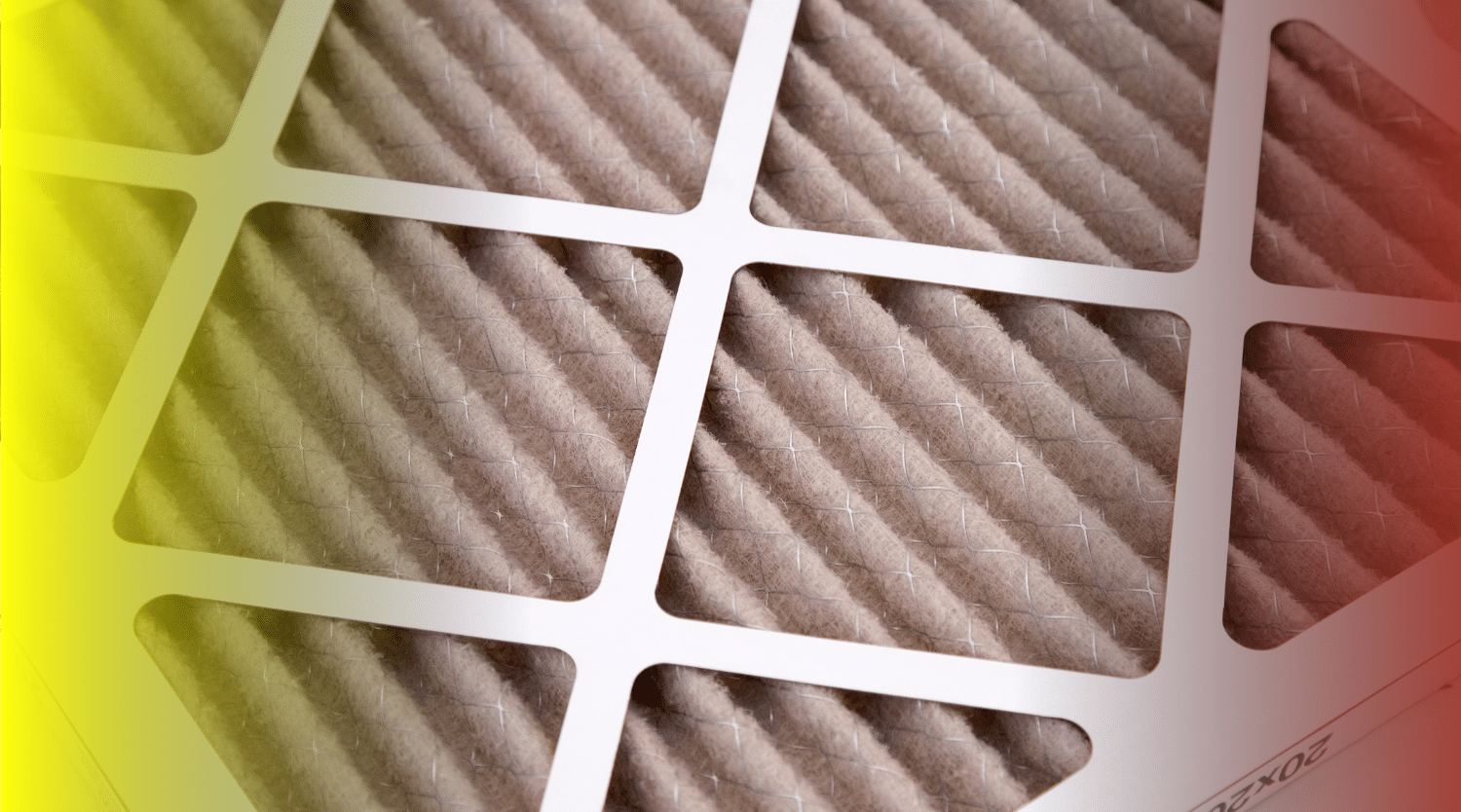
A window AC filter change or cleaning should happen about every 30 days while you run the unit, and every 2 to 3 months at most for light use. Most window units use a washable mesh filter behind the front grille. Cleaning it takes about 10 minutes and a sink.
At P.I. Home Inspection Services, we check window units in homes across Batavia and the Chicago suburbs. A clogged filter is one of the most common things we find. This guide covers how often to clean or replace the filter, the exact steps, which filter to buy, warning signs, and when a dirty filter points to a bigger problem.
How Often Should You Do a Window AC Filter Change?
Check the filter once a month during cooling season. Clean or replace it when it looks gray or dusty. The U.S. Department of Energy advises cleaning or replacing AC filters every month or two while you use the unit. It also says filters need more attention with constant use, dusty rooms, or furry pets.
Use this table as a starting point:
| Your home | How often to clean or replace |
|---|---|
| Unit runs every day, pets, or allergies | Every 2 to 4 weeks |
| Unit runs most days, no pets | Every 30 days |
| Light or weekend use | Every 60 to 90 days |
| Nearby remodeling or drywall dust | Every week until the work is done |
| End of cooling season | One final cleaning before storage |
A few things make filters clog faster:
- Pets. Hair and dander build up on the mesh quickly.
- Allergies or asthma. Cleaner filters mean fewer triggers floating in the room.
- Local pollen. In the Fox Valley, spring pollen and early summer cottonwood fluff can coat a filter in days.
- Placement. A unit facing a busy street or a dusty yard pulls in more debris.
Tip: Many newer units have a filter reminder light. It usually runs on a timer, not a sensor. Check the filter when it lights up, then press and hold the filter button to reset it.

How to Change a Window AC Filter Step by Step
Here is how to clean or replace the filter in most window units. Always check your owner’s manual first, since grille latches vary by brand.
- Turn off and unplug the unit. Never work on a window AC that is plugged in. The fan or compressor could start while your hands are inside.
- Open the front grille. Most grilles lift up, pull forward, or pop off with tabs. Some slide out from the top or side. Don’t force it.
- Slide out the filter. Note which side faces the room so you put it back the same way.
- Check the filter type. A plastic frame with mesh is reusable. A cardboard or fiber frame is disposable. Some units also have a second carbon filter for odors.
- Remove loose dust. Tap the filter over a trash can or use a vacuum brush attachment.
- Wash a reusable filter. Rinse it with warm water and a few drops of mild dish soap. Scrub gently with a soft brush. Rinse again with clean water.
- Let it dry completely. Air dry it out of direct sun, which can warp plastic. A damp filter can grow mold once it is back inside a cool, dark unit.
- Wipe the grille and intake. While the filter dries, wipe the grille. Gently vacuum the coil fins with a soft brush. Don’t bend the fins.
- Reinstall the filter. Slide it in so it sits flat in its track with no gaps. A crooked filter lets dust skip past it.
- Close the grille and restart. Plug the unit back in and turn it on. Airflow should feel stronger within a minute or two.
If you replace a disposable filter instead, match the size and type in your manual. Put the new one in the same way the old one came out.
Reusable vs. Disposable Window AC Filters
Most window units come with a reusable mesh filter. You rarely need to buy a new one unless it tears or goes missing.
| Filter type | How to care for it | Best for |
|---|---|---|
| Reusable mesh (factory) | Wash every 2 to 4 weeks | Most window units |
| Washable foam (cut-to-fit) | Wash, or replace when it crumbles | Older units or lost filters |
| Disposable fiber | Replace every 1 to 3 months | Units designed for them |
| Activated carbon (add-on) | Replace about every 3 months | Smoke, cooking, or pet odors |
How to Choose a Replacement Filter
- Start with the model number. Find it on a sticker on the side of the unit or inside the grille. Search for a filter made for that model.
- Use cut-to-fit foam as a backup. Hardware stores sell foam filter sheets you can trim to size. Check your manual first, since some brands don’t allow it.
- Skip thick furnace filters. A dense central-air filter can choke a small window unit’s airflow. That makes it work harder, not better. Central systems follow their own schedule, so see this guide on how often to change a home air filter for furnace and central AC filters.
- Replace damaged filters. A torn or brittle mesh lets dust coat the coil, even if it looks clean.
Does a Window AC Filter Clean the Air You Breathe?
Partly. The standard mesh filter’s main job is to keep lint and dust out of the unit’s coil and fan. It catches larger particles like dust and pet hair, but it does not work like an air purifier. If someone in your home has allergies, pair a clean AC filter with a room air purifier.
What Happens If You Don’t Change a Window AC Filter?
A dirty filter chokes airflow, raises energy bills, and can shorten the life of the unit. ENERGY STAR explains that a dirty filter slows airflow and makes your system work harder, which wastes energy. It also warns that dust buildup inside the system can lead to costly repairs or early failure.
Here is what that looks like in a real home:
- Weak cooling. Less air moves over the cold coil, so the room never feels quite cool.
- Frozen coil. Low airflow can let ice form on the coil. When it melts, water can drip inside or down your wall.
- Musty smells. Dust traps moisture, and moisture feeds mold. That’s why black mold can spread in damp basement areas where window units often sit.
- Dirty coil. Once dust reaches the coil, a rinse won’t fix it. The coil needs a deeper cleaning.
- Shorter life. The compressor and fan motor run longer and hotter to do the same job.
Signs You Need a Window AC Filter Change Right Away
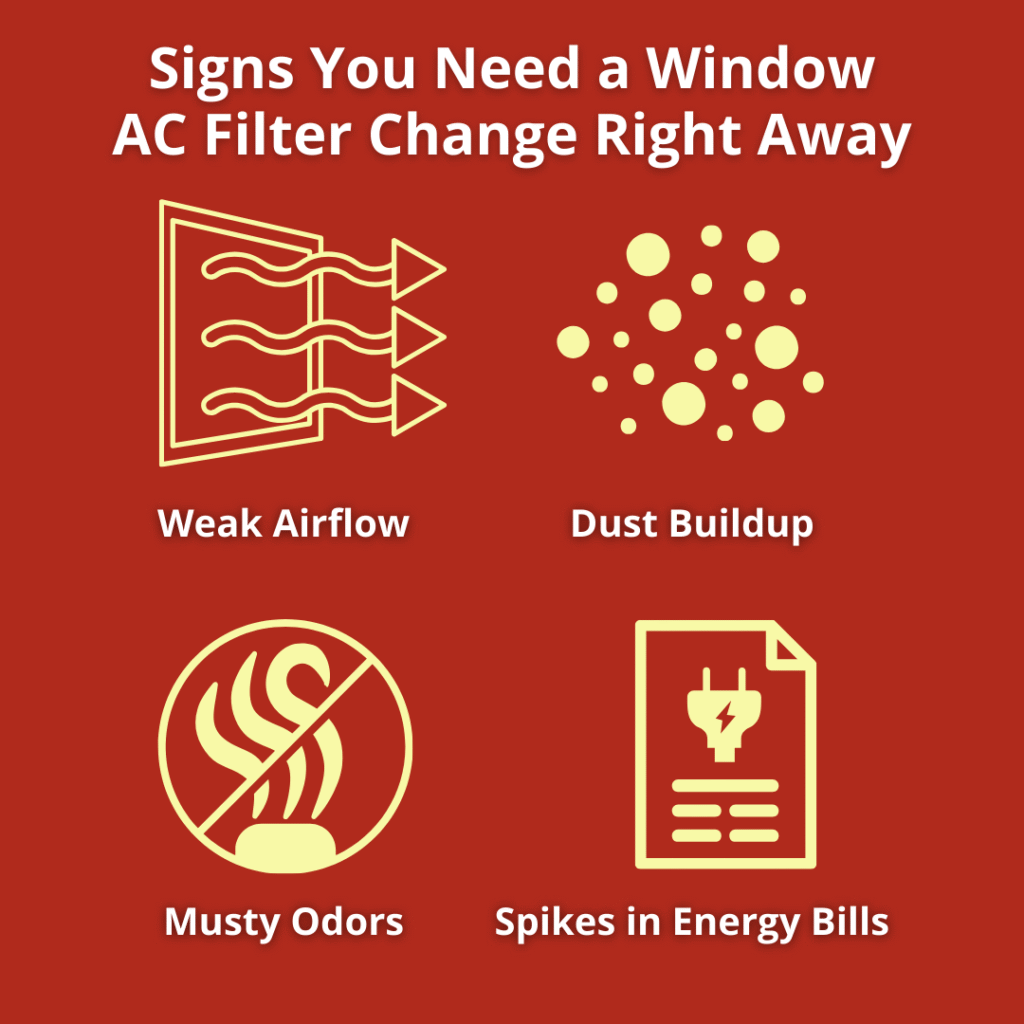
Don’t wait for the calendar if you notice any of these:
- Weak airflow at the vents, even on high
- The room takes longer to cool than it used to
- Gray fuzz or pet hair on the grille
- A musty or sour smell when the unit starts
- Ice on the front coil or fins
- Water dripping inside the room
- Your electric bill jumps without a change in use
For more ideas on moving cool air around your rooms, see our guide to ceiling fan directions for summer and winter.
End-of-Season Filter Care for Illinois Homes
In northern Illinois, window units usually go into storage in late September or October. Give the filter one last cleaning before you pull the unit out of the window.
- Clean and dry the filter fully. Storing a damp filter all winter invites mold.
- Wipe out the drain channels. The Department of Energy suggests running a stiff wire through the drain channels now and then to keep them clear.
- Cover or remove the unit. If it stays in the window, use a fitted outdoor cover. If you remove it, store it upright in a dry spot, not a damp basement corner.
- Check the window seal in spring. Before first use, make sure the foam seal still touches the unit’s case so cool air stays inside.
Related Questions to Explore
Can I run a window AC without a filter?
No. Without a filter, dust and lint go straight to the coil and fan. That lowers cooling power and can lead to costly repairs. If your filter is drying, wait to run the unit. Dust on a cold, damp coil can also feed mold growth, much like mold in damp basement areas.
Can I vacuum my window AC filter instead of washing it?
Yes, for light dust. A vacuum brush attachment works well between washes. If the filter has greasy film, pet hair, or any musty smell, wash it with warm, soapy water.
Do all window air conditioners have filters?
Almost all modern window units have a removable filter behind the front grille. Some older or low-cost units may not. If you can’t find yours, check the manual or look up the model number online.
Why is my window AC filter reset light on?
Most filter lights run on a timer based on hours of use. The light means it’s time to check the filter, not that it’s broken. Clean the filter, then hold the filter button for a few seconds to reset it.
Can I use bleach to clean a moldy AC filter?
Mild dish soap and warm water are safer for most mesh filters. Strong cleaners can damage the mesh. If you see mold on the filter, check the coil and drain pan too. Mold on the filter often means there is more inside. The same moisture habits that help you prevent mold in your shower also keep a window unit cleaner.
Does a clean filter matter during a home inspection?
Yes. During a home inspection in Batavia and the Chicago suburbs, we look at how cooling equipment has been kept up. A clogged filter, a dirty coil, or water stains under a window unit can point to neglect. If you have questions about your home, contact P.I. Home Inspection Services.
When to Call a Professional
A filter change fixes most airflow problems. It won’t fix everything. Call a pro if you notice any of these after cleaning the filter:
- The unit still blows warm air or cools poorly
- Ice keeps coming back on the coil
- Water stains, soft drywall, or peeling paint below the window
- A burning, electrical, or chemical smell
- Mold growth on the coil, drain pan, or nearby walls
HVAC problems are an appliance technician’s job. Signs of water damage or mold in the wall around a unit are another story. As an InterNACHI Certified Professional Inspector with IAC2 mold certification, Mark Sylvester can check for moisture intrusion around windows and walls. You can learn more about our inspector’s training and credentials.
Conclusion
A window AC filter change is one of the easiest ways to keep a room cool and your energy bill in check.
- Check the filter monthly and clean it every 2 to 4 weeks in heavy use.
- Let reusable filters dry completely before you put them back.
- Clean the filter one last time before you store the unit for winter.
If you’re buying a home or want a closer look at the systems in your current one, schedule an inspection with P.I. Home Inspection Services.
